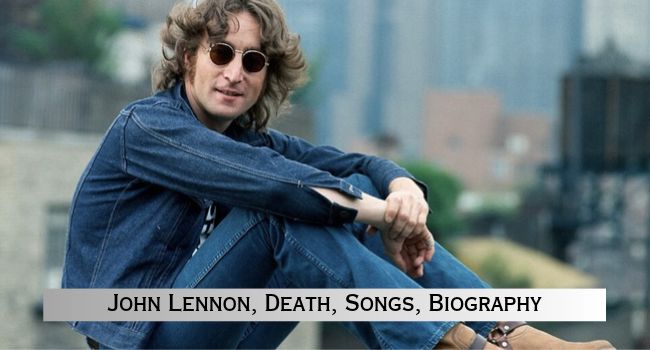
John Winston Ono Lennon was a British musician, artist, and writer who gained worldwide fame as one of the Beatles’ founders. With his unique voice, talent, and character, Lennon not only created successful music but also had a flourishing solo career and worked together with artist and musician Yoko Ono.
Liverpool, England, was the birthplace of John Lennon, who arrived in the world on October 9, 1940. His mother and father were Alfred and Julia Lennon, who divorced after their son’s birth. Lennon spent most of his childhood living with his aunt Mimi Smith. When he was a teenager, he was interested in rock and roll and formed a skiffle group known as the Quarrymen that evolved into the Beatles.
Lennon achieved worldwide fame as the co-lead singer, rhythm guitarist and songwriter of the Beatles, who worked with Paul McCartney on numerous songs of this influential band. Beyond music, Lennon also wrote books and created visual art. John Lennon pursued his career as a musician after the breakup of the Beatles and released albums like John Lennon/Plastic Ono Band, Imagine, and Double Fantasy.
Songs such as ‘Imagine’ and ‘Give Peace a Chance’ were closely linked with his campaigns for peace and against war. He had two sons: Julian, born from his marriage with Cynthia Lennon, his first wife, and Sean, born out of his relationship with his second wife, Yoko Ono. John Lennon’s life was tragically cut short in New York City on December 8, 1980.
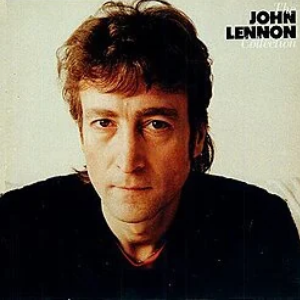
Credit: wikimedia.org
The biography of John Lennon mentions that he has been honored significantly both as a member of the Beatles and as a solo musician. The biography of John Lennon mentions that John Lennon was honored with eight Grammy Awards, including two Lifetime Achievement Awards, five BRIT Awards, 21 NME Awards, 15 Ivor Novello Awards, and one Academy Award.
| Born | 09 October 1940 |
| Location | Liverpool, England |
| Died | 08 December 1980 (aged 40) |
| Died Location | New York City, US |
| Cause of death | Gunshot wounds |
| Occupation | Singer, songwriter, musician |
| Association with the Beatles | Rhythm Guitarist and Singer/A founding member |
History
Early life
John Lennon was born on 9 October 1940 in Liverpool, England, to Julia Lennon and Alfred Lennon, who was a merchant seaman. Lennon was primarily raised by his aunt, Mimi Smith, who was his mother Julia’s sister. At the age of 15, he developed an interest in music and formed a skiffle band known as the Quarrymen.
In 1957, the Quarrymen band played at a garden fête held at St Peter’s Church in Woolton, where John met Paul McCartney for the first time. Impressed by Paul’s musical talents, Lennon asked Paul to join the band.
Later on, Paul suggested that the band should have his friend George Harrison as a member of the band due to his guitar talents. Stuart Sutcliffe, who was an ex-classmate of Lennon from art school, later joined the band as a bass player. In 1960, the band started performing in Hamburg, West Germany, where they performed late-night gigs.
Pete Best, who played the drums, was recruited to join the band after their Hamburg period. Although his aunt had reservations regarding his educational and future plans, Lennon pursued his dream of being a musician. In 1961 and 1962, the band visited Hamburg again for additional performances.
With The Beatles
The band, which changed its name from the Quarrymen to the Beatles, established a reputation through concerts in Liverpool and Hamburg. In 1962, ‘Love Me Do’ proved to be the group’s first success single, while ‘Please Please Me’ made a breakthrough in 1963 as the first major hit of the band in the UK. The publication of their debut album, ‘Please Please Me’, became one of the milestones of rapid popularity of the band.
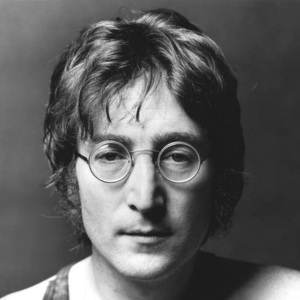
Credit – thecurrent.org
In 1963, the Beatles’ fame triggered a wave of fan hysteria in the media, termed ‘Beatlemania’. Along with band tours around Britain and international recognition of the group, John Lennon developed an image of a quick-witted and self-confident artist. In 1962, he married Cynthia Powell, who he met at the Liverpool College of Art; their son, Julian, was born in 1963.
With the development of the Beatles’ career, Lennon and other members of the band left the field of pure pop and rock. With albums like Rubber Soul, Revolver and Sergeant Pepper’s Lonely Hearts Club Band, the band members introduced new sound, lyrics and studio techniques. The Beatles began treating recording studio as a tool of creation of something new, different from rock music albums.
In February 1968, Lennon accompanied the other members of the Beatles to a retreat at Rishikesh, India, where the Beatles learned the Transcendental Meditation from the Maharishi Mahesh Yogi. The peaceful setting of the retreat allowed the group to step away from their usual routine, while Lennon found renewed inspiration for his songwriting. Lennon left the retreat early, along with George Harrison, after encountering problems with the Maharishi.
Lennon met the Japanese avant-garde artist Yoko Ono in 1966 in London, and started collaborating with her in the creation of music and art. They got married in 1969. Ono became involved in Lennon’s creative life just as the Beatles were experiencing problems with their business and management and the future direction of the group, and the press frequently blamed her for the band’s troubles, even though the breakup of the group had more causes.
In September 1969, Lennon informed privately the rest of the members of the Beatles of his desire to leave the band. While continuing his collaboration with Ono and building his solo career, the business situation postponed his announcement until Paul McCartney announced publicly in April 1970 his intention to leave the band.
Solo Career
John Lennon started creating music on his own in 1968 by way of making experimental music with his wife Yoko Ono, which included Unfinished Music No. 1: Two Virgins. He started a new band called Plastic Ono Band in 1969, and made an independent effort by releasing “Give Peace a Chance,” his first solo single without the rest of the Beatles members. His second solo single was called “Cold Turkey.”
John lennon solo albums came out called John Lennon/Plastic Ono Band in 1970, which was highly influenced by his personal experience with primal scream therapy. He released another album called Imagine in 1971, whose title song is probably one of his most famous songs. “Jealous Guy” and “Gimme Some Truth” are some more examples of his success as a solo performer.
Lennon and Ono relocated to New York and participated in politics against the Vietnam War, supporting such events as the release of political activist John Sinclair. The couple’s involvement in the anti-war protests led them into the Nixon government’s attention and resulted in Lennon’s deportation on charges of a past drug conviction in Britain. Lennon appealed against his deportation order while writing new records including his politically-themed album Some Time in New York City and Mind Games album from 1973.
In the time of their separation known as his “Lost Weekend,” Lennon was living and creating in Los Angeles and New York. Lennon issued his Walls and Bridges album, which featured the first Lennon’s number-one hit in the U.S. since Beatles days entitled “Whatever Gets You thru the Night,” and finished his Rock ‘n’ Roll, which consisted of his youth songs. In the end, Lennon and Ono reunited and Lennon’s immigration problems began to resolve: in 1975, a federal appeal court decided in Lennon’s favor and he got a U.S. permanent residency in 1976.
Following the birth of Sean Lennon in October 1975, John Lennon withdrew from the studio and limelight to spend time bringing up his child. He got back into music again in 1980 when he collaborated and recorded with Ono on the Double Fantasy album which dealt with their relationship and family life. This album which came out in November 1980 signaled his come-back, but Lennon was murdered that very month.
Political Activism
John Lennon and his wife Yoko Ono used their honeymoon and public prominence to advocate for peace in 1969. During their “Bed-In for Peace” in Amsterdam, Lennon and Ono discussed their non-violent attitude and stance against war in interviews with reporters; the same year, they arranged another Bed-In in Montreal. While staying there, Lennon and Ono recorded the song “Give Peace a Chance”, which soon turned into an anti-war anthem.
Moreover, Lennon and Ono continued to promote their peace philosophy through concerts and public appearances. At the Toronto Rock and Roll Revival in September 1969, John and Yoko performed along with the Plastic Ono Band in order to spread their views on peace and love. Lennon and Ono combined such means of expression as music, show and media coverage to reach people.
The year 1971 saw Lennon advocating for various political issues via benefit concerts and protest songs. Lennon participated in the John Sinclair Freedom Rally in Ann Arbor, Michigan, and demanded release of the activist from jail, who was charged with possession of marijuana. Besides that, Lennon and Ono performed at the benefit event in support of those families whose relatives were killed or incarcerated because of the uprising, and wrote “Attica State” in response to the deaths and unrest there.
Both Lennon and Ono dealt with the conflict in Northern Ireland in the album Some Time in New York City, which appeared in 1972. They expressed their position regarding the conflict and sympathies for Irish nationalism in two songs “Sunday Bloody Sunday” and “The Luck of the Irish”. These pieces of music delivered political statements in rather direct manner but, nevertheless, provoked discussion owing to their straightforward lyrics.
At that time John Lennon was involved in a protracted immigration case in the United States of America. John Lennon and Yoko Ono relocated to New York in 1971, but Lennon soon faced deportation proceedings in the United States because of his 1968 cannabis-possession conviction in Britain. In particular, Lennon appealed the decision claiming that his conviction did not prevent him from permanent residence according to American legislation.
The appeal court of the Second Circuit rendered the decision on October 7, 1975, according to which Lennon’s conviction in Great Britain was not a ground for making him excludable from permanent residence under the immigration laws of America. As a result, the order for deportation was vacated, and the case was remanded. John Lennon received permanent resident status in 1976.
Death
Events before the incident paragraph, The main incident Paragraph, The aftermath paragraph, Public reaction and legacy paragraph
John Lennon spent his day on December 8, 1980, in New York with his wife, Yoko Ono, promoting their album Double Fantasy and making music. That same day earlier, John signed a copy of their new album for Mark David Chapman outside of the Dakota, their apartment building. Lennon and Ono came back home from recording; Chapman waited for them nearby.
When Lennon and Ono reached their apartment building at around 10:50 p.m., Chapman shot at Lennon from behind. He was transported to Roosevelt Hospital, where he was declared dead the same day; Lennon was 40 years old. Chapman stayed at the scene and was taken into custody by the police.
The news about John lennon death spread fast; crowds started gathering near the Dakota and Central Park in New York. Yoko Ono called to observe ten minutes of silence in her husband’s memory. The ceremonies were conducted both in New York and in John’s native town of Liverpool.
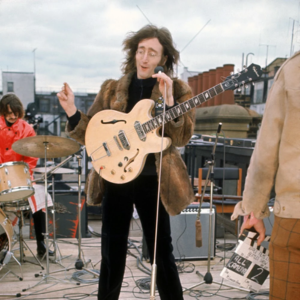
Credit – etsy.com
John Lennon’s death caused grief all over the globe, while radio stations were playing Lennon’s music and music of the Beatles as a tribute. Songs such as “Imagine” kept on reaching new listeners. He was inducted into the Rock and Roll Hall of Fame as a solo artist in 1994; he had already been inducted as a Beatle with the group.
Every song John Lennon wrote for The Beatles
Songs list
| Songs Name | Years |
| Misery | 1963 |
| Ask Me Why | 1963 |
| Please Please Me | 1963 |
| Do You Want to Know a Secret | 1963 |
| There’s a Place | 1963 |
| It Won’t Be Long | 1963 |
| All I’ve Got to Do | 1963 |
| Not a Second Time | 1963 |
| This Boy | 1963 |
| A Hard Day’s Night | 1964 |
| I Should Have Known Better | 1964 |
| If I Fell | 1964 |
| I’m Happy Just to Dance with You | 1964 |
| Tell Me Why | 1964 |
| Any Time at All | 1964 |
| I’ll Cry Instead | 1964 |
| When I Get Home | 1964 |
| You Can’t Do That | 1964 |
| I’ll Be Back | 1964 |
| I Call Your Name | 1964 |
| No Reply | 1964 |
| I’m a Loser | 1964 |
| I Don’t Want to Spoil the Party | 1964 |
| I Feel Fine | 1964 |
| Help! | 1965 |
| You’ve Got to Hide Your Love Away | 1965 |
| You’re Going to Lose That Girl | 1965 |
| Ticket to Ride | 1965 |
| It’s Only Love | 1965 |
| Yes It Is | 1965 |
| Norwegian Wood (This Bird Has Flown) | 1965 |
| Nowhere Man | 1965 |
| The Word | 1965 |
| Girl | 1965 |
| In My Life | 1965 |
| Run for Your Life | 1965 |
| Day Tripper | 1965 |
| I’m Only Sleeping | 1966 |
| She Said She Said | 1966 |
| And Your Bird Can Sing | 1966 |
| Doctor Robert | 1966 |
| Tomorrow Never Knows | 1966 |
| Rain | 1966 |
| Lucy in the Sky with Diamonds | 1967 |
| Being for the Benefit of Mr. Kite! | 1967 |
| Good Morning Good Morning | 1967 |
| A Day in the Life | 1967 |
| I Am the Walrus | 1967 |
| Strawberry Fields Forever | 1967 |
| All You Need Is Love | 1967 |
| Dear Prudence | 1968 |
| Glass Onion | 1968 |
| The Continuing Story of Bungalow Bill | 1968 |
| Happiness Is a Warm Gun | 1968 |
| I’m So Tired | 1968 |
| Julia | 1968 |
| Yer Blues | 1968 |
| Everybody’s Got Something to Hide Except Me and My Monkey | 1968 |
| Sexy Sadie | 1968 |
| Revolution 1 | 1968 |
| Cry Baby Cry | 1968 |
| Revolution 9 | 1968 |
| Good Night | 1968 |
| Revolution | 1968 |
| Hey Bulldog | 1969 |
| Come Together | 1969 |
| I Want You (She’s So Heavy) | 1969 |
| Because | 1969 |
| Sun King | 1969 |
| Mean Mr. Mustard | 1969 |
| Polythene Pam | 1969 |
| Dig a Pony | 1970 |
| Across the Universe | 1970 |
| Dig It | 1970 |
| One After 909 | 1970 |
| Don’t Let Me Down | 1969 |
| The Ballad of John and Yoko | 1969 |
| You Know My Name (Look Up the Number) | 1970 |
Discography
With The Beatles
| Discography Name | Years |
| Please Please Me | 1963 |
| With the Beatles | 1963 |
| A Hard Day’s Night | 1964 |
| Beatles for Sale | 1964 |
| Help! | 1965 |
| Rubber Soul | 1965 |
| Revolver | 1966 |
| Sgt. Pepper’s Lonely Hearts Club Band | 1967 |
| Magical Mystery Tour | 1967 |
| The Beatles (‘The White Album’) | 1968 |
| Yellow Submarine | 1969 |
| Abbey Road | 1969 |
| Let It Be | 1970 |
| Past Masters | 1988, compilation |
Solo Albums
| Solo Albums Name | Years |
| Unfinished Music No. 1: Two Virgins | 1968 |
| Unfinished Music No. 2: Life with the Lions | 1969 |
| Wedding Album | 1969 |
| John Lennon/Plastic Ono Band | 1970 |
| Imagine | 1971 |
| Sometime in New York City | 1972 |
| Mind Games | 1973 |
| Walls and Bridges | 1974 |
| Rock ‘n’ Roll | 1975 |
| Shaved Fish | 1975 |
| Double Fantasy | 1980 |
| Milk and Honey | 1984 |
Instruments Used
Guitars
| Year | Electric Name | Start Year | End Year |
| 1958 | Rickenbacker 325 Capri | 1960 | 1964 |
| 1963 | Rickenbacker 325c64 Jetglo | 1964 | 1965 |
| 1961 | Fender Stratocaster Sonic Blue | 1964 | 1967 |
| 1965 | Epiphone 230TD Casino Sunburst | 1965 | 1971 |
| 1961 | Gibson SG Standard Standard | 1966 | 1968 |
| NA | Les Paul Jr. Red | 1969 | 1980 |
Acoustic
| Year | Electric Name | Start Year | End Year |
| 1962 | Gibson J-160E Sunburst | 1962 | 1964 |
| 1964 | Gibson J-160E Sunburst | 1964 | 1980 |
| 1964 | Framus Hootenanny 12-String Natural | 1964 | 1970 |
| 1967 | Martin D-28 Natural | 1967 | 1980 |
Other Instruments
| Year | Electric Name | Start Year | End Year |
| 1965 | Vox Continental | 1965 | 1972 |
| NA | Steinway Grand Piano | 1965 | 1980 |
| 1965 | Fender VI | 1968 | 1970 |
FAQs
What did John Lennon do that was controversial?
John Lennon stirred up major controversy through provocative public statements, political activism, and his contentious personal behavior.
Why was there no funeral for John Lennon?
John Lennon did not have a traditional or public funeral, as his wife, Yoko Ono, did not want a massive media presence, risks to public safety, or large crowds gathering outside their home, ‘The Dakota’.
How old would John Lennon be today if alive?
John Lennon would have been 86 years old today.
Egg2025, Telegram, Onlyfans, Wiki, Net Worth, Husband, Age, Height, Weight, Biography
Ariana Grande Net Worth 2026, Age, Height, Weight, Husband, Biography
Norissa Valdez Age, Wiki, Father, Net Worth, Height, Weight, Education, Biography
Anabel Gomez Lopez, Age, Wiki, Height, Weight, Net Worth, Biography
Kristian Alfonso Net Worth 2026, Age, Spouse, Husband, Height, Weight, Biography